


Supporting Architectural Glass Use from Design Through Installation
Devin Bowman, General Manager, Technical Glass Products and AD Systems
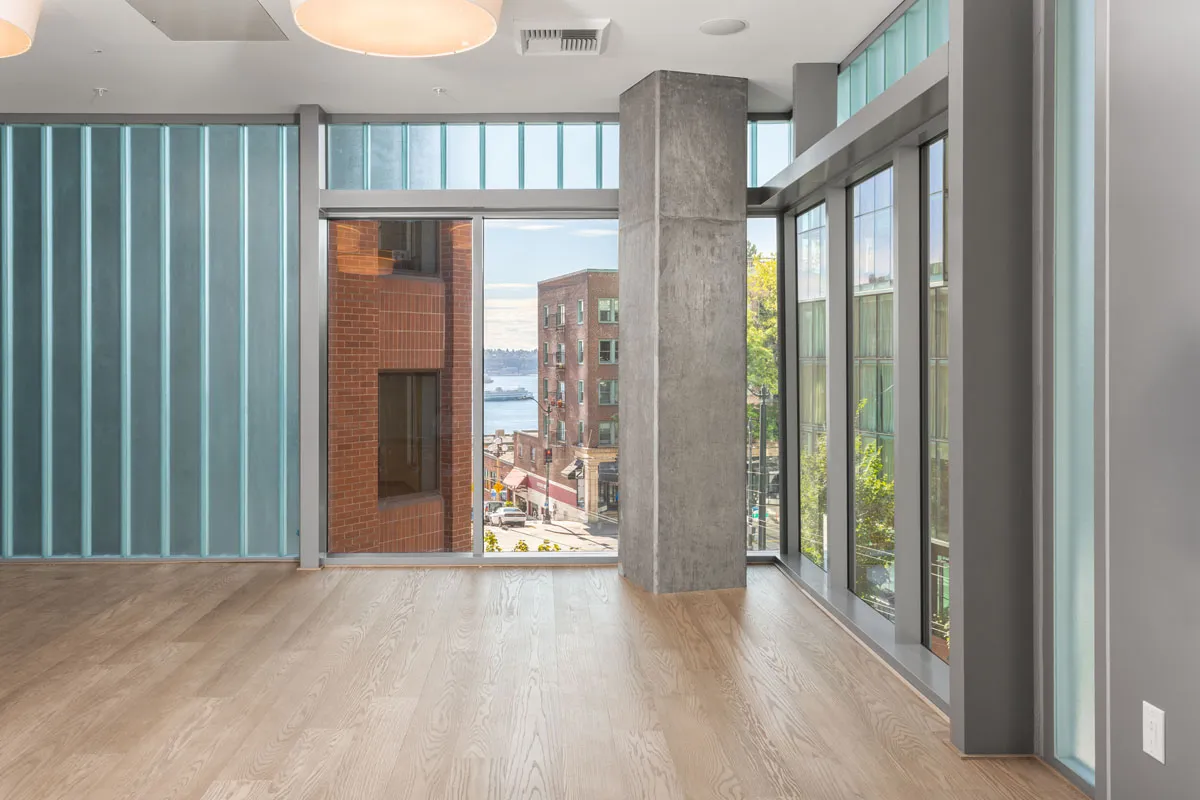
Architectural glass can provide several performance capabilities to the built environment, including:
- Impact resistance
- Fire ratings
- Security ratings
- Bird-friendly features
- Glare control
- Thermal breaking and other sustainability improvements
- Radiation shielding
And designing with it offers key advantages to a building’s aesthetics and functionality. For instance, The Emerald, a residential tower in downtown Seattle, combines fire-rated butt-glazed assemblies with channel glass to balance visual connection with privacy, daylight access with sound attenuation and much more.
Understanding the capabilities and limitations of specific architectural glazing assemblies can be the difference between a groundbreaking design and the status quo. Technical Glass Products (TGP) supports designers throughout the design and construction process so project teams select the right architectural glass for their application and install it correctly. This fosters more innovative applications and a streamlined specification process.
Discover architectural glass options in the planning phase
There multiple glazing types. And there are systems, like integrated louvers, that can be added to an assembly to meet project flexibility goals. With several systems and combinations of components available, finding the right architectural glass assembly can be a difficult task.
TGP’s sales and engineering teams are well-versed on specialty rated and non-rated architectural glass—as well as complementing systems. With this knowledge, TGP’s experts can help guide building professionals in designing the most appropriate glazing assembly for an application. As a result, a project can more readily meet aesthetic goals without compromising building functionality.
Ensure each assembly meets code requirements and design goals
In addition to project goals, architectural glass may be called on to meet code-driven requirements for fire and life safety. While these requirements will most likely involve fire ratings, they can also include things like radiation shielding and even bird-friendly façades. Well-versed in local building codes, TGP’s team can help designers navigate building requirements and find solutions that are code-compliant and meet design criteria.
It is important to note that not every glazing assembly will need to meet specific code-driven requirements, and often specialty rated and non-rated assemblies will be found within the same built environment. Collaborating with a manufacturer that supplies multiple types of architectural glass can streamline the planning and design process without compromising performance and aesthetic coherence.
Glazing design helps when adaptability is necessary
While early collaboration minimizes instances of post fabrication design pivots, it does not eliminate it completely. Construction is full of variables, and sometimes a specific detail, such as the need for compartmentation or specific door hardware, can be unintentionally overlooked.
Given the vast number of moving parts and nuance inherent in today’s construction, project teams are encouraged to have contingent plans for missed details and to collaborate with manufacturers who can quickly adapt, communicate and provide support to ensure a project is completed as intended.
While every architectural glass assembly from TGP is custom engineered, the production teams remain adaptable to last-minute changes in specifications. By combining transparent communication and coordinated engineering and fabrication, these teams help projects stay on schedule even when there are post-planning design changes.
Solving architectural glass installation challenges
Early collaboration in architectural glass design can deliver significant value across the entire planning phase. However, a glazing manufacturer’s role does not end when building plans are approved and shovels break ground. It often extends into the construction phase so glazing assemblies are erected and installed correctly.
Supporting glazing assembly installation is especially relevant when working with complex curtain wall systems. Because TGP’s products, like the SteelBuilt Curtainwall Infinity™ System, can offer large spans and impressive heights, they can seem more difficult to install than other options. Despite their impressive scale, these systems can be efficient and simpler than others to install—as a glazier noted of the systems used in the Will Rogers World Airport.
Beyond improving curtain wall engineering, TGP remains at the ready when glaziers and other subcontractors have questions about installation. This long-term involvement helps ensure project success.
Glazing design help is more than simply shipping a door or curtain wall
Architectural glass has come a long way since the mid-19th century. It has even come a long way in the 50 years TGP has been in the glazing industry.
With the vast array of architectural glass and specialty glazing available, not to mention coatings, framing systems and other adjacent components, designing and engineering a glazing assembly can require an extensive amount of knowledge.
TGP helps building professionals at multiple stages in the design and construction process with person-to-person support and a vast library of online resources.
Check out Curtain Wall Basics or Channel Glass Basics to learn more about TGP’s architectural glass systems before you start planning your next project.
 Devin Bowman is General Manager of Technical Glass Products (TGP) and AD Systems. With over 20 years of industry experience, Bowman is actively involved in advancing fire- and life-safety codes and sits on the Glazing Industry Code Committee (GICC).


