


What are the Benefits of a Glazed Curtain Wall?
Devin Bowman, General Manager, Technical Glass Products and AD Systems
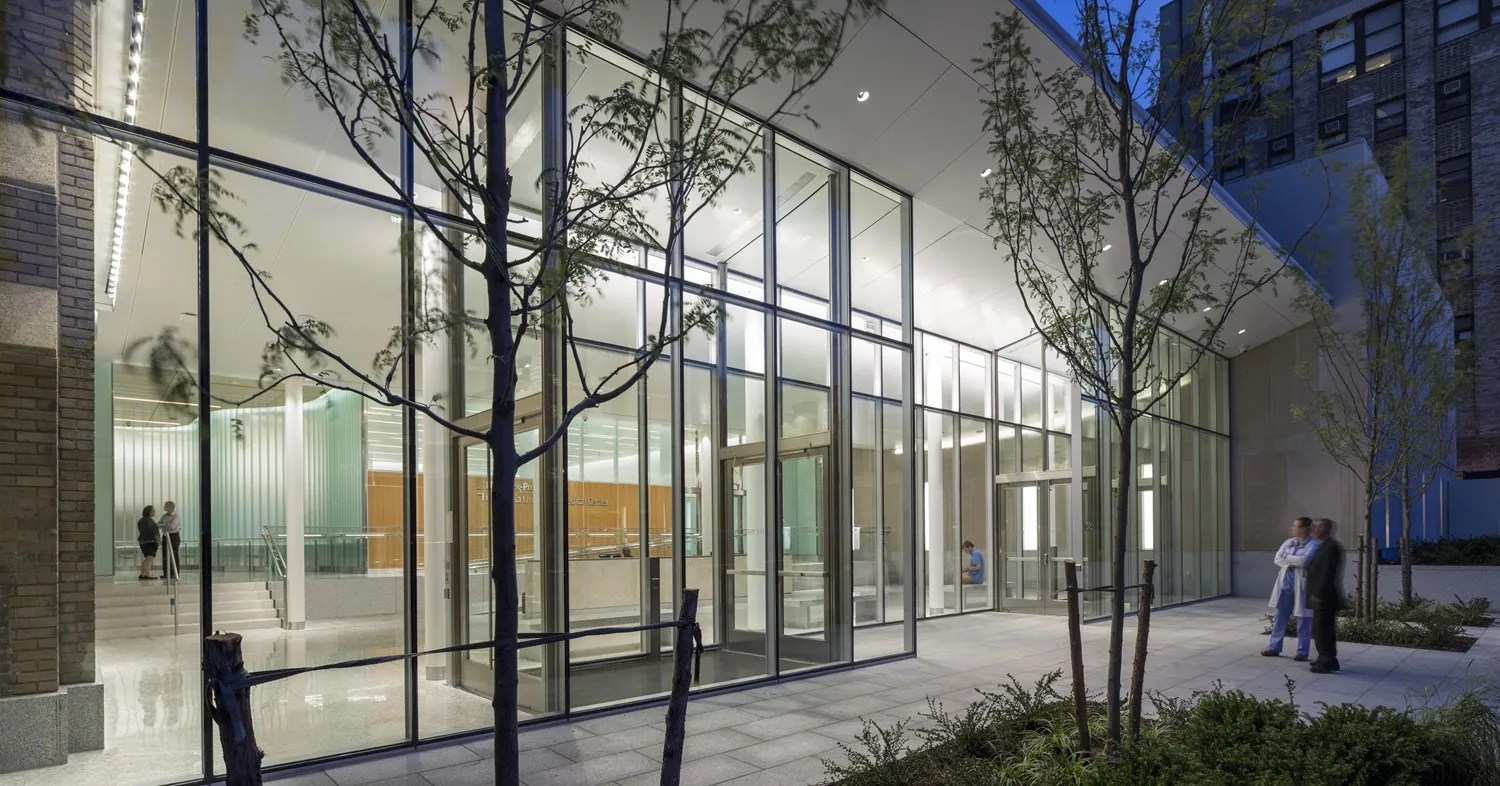
Glazed curtain walls can help design teams create transparent façades and deepen how far light can extend into a building. Being transparent, these assemblies can also ground occupants by visually connecting them to the surrounding landscape.
When glass curtain walls are paired with strategically placed opaque or translucent wall systems, like channel glass, they can create interiors that fulfill a prospect-refuge approach to design. This approach balances privacy and visual connection to balance communal spaces with privacy and concealment—both help the built environment flex to the wide range of potential occupant need. For example, the NewYork Presbyterian Hospital – Morgan Stanley Adult Emergency Room uses a glazed curtain wall and channel glass system to strike this delicate balance.
All these benefits fit within the umbrella term, biophilia. This key concept describes a wide range of strategies for making buildings more welcoming and better suited to be restorative environments, often by prioritizing natural materials, daylight and connection to the world outside the building.
While contributing to biophilia remains important, the benefits of glazed curtain walls extend beyond this concept to include sustainability and multifunctionality.
What is a glazed curtain wall system’s main function?
Able to be engineered with or without a door, a glazed curtain wall’s primary function is to create a transparent wall in both interior and exterior applications.
For exterior applications, these non-load-bearing glazing systems resist air and water infiltration. In fact, SteelBuilt Curtainwall® Systems from Technical Glass Products (TGP) demonstrate air leakage rates of 0.01 cubic feet per minute per square foot (cfm/sq. ft.) or less at a pressure differential of 6.24 psf. This system also resists water penetration at 15 pounds per square foot (psf) or higher. As a result, the SteelBuilt Curtainwall System keeps interiors safe and dry from inclement weather. Together with glazing that minimizes solar heat gain, a glazed curtain wall can be an effective and resilient single or multi-story skin to the built environment.
For interior applications, these systems increase openness and visual connectivity while managing wayfinding and compartmentation efforts. For instance, curtain walls within the Will Rogers World Airport allow travelers to view the terminal before they reach security checkpoints. These systems also control access to support interior compartmentation.
Steel-framed glazed curtain walls offer multifunctionality
Narrow-profile, steel framing can help glazed curtain walls contribute to building performance goals beyond air and water infiltration resistance. For instance, Fireframes® Curtainwall Series from TGP can support transparent fire-rated design inside a building and along its envelope. Fire-rated systems can also include ratings for hurricane-resistance to expand design options in High Velocity Hurricane Zones (HVHZ).
In addition to meeting code-driven requirements for fire and life safety, steel-framed glazed curtain walls can also reduce thermal bridging. Compared to aluminum, steel frames have a lower thermal conductivity, which supports efficient operation especially when paired with low-emissivity (low-e) and other high-performance glazing.
Because glazed curtain walls can meet a range of performance goals—often multiple simultaneously—they can help design teams achieve efficient and effective designs that balance occupant comfort, full building safety and long-term sustainability.
Glazed curtain walls can support more sustainable design
In addition to contributing multifunctionality across the building envelope and within a project, glazed curtain walls can support sustainable design practices, such as the ones outlined in LEED v5. This latest edition of LEED defines several categories in which a glazed curtain wall can help projects achieve credits toward LEED certification.
The SteelBuilt Curtainwall® System, when its use is discussed early in the process, can help meet the Integrative Process Human Impact Assessment prerequisite (IPp2), which includes assessing occupant experience. This system can also satisfy several options within the Indoor Environmental Quality (EQ) category as well as options in the Energy and Atmosphere (EA) category.
Finally, some glazed curtain walls, like Fireframes® Curtainwall Series, have Environmental Product Declarations (EPD) and Declare Labels, both of which can be used to contribute credits toward LEED v5’s Materials and Resources (MR) category.
A word on mass timber and glazed curtain walls
Glazed curtain walls have the potential to deliver several value points simultaneously—from fire and life safety to sustainability and biophilic design. For most projects and applications, these systems will feature transparent glazing held within a metal perimeter frame. However, this is not the only option.
Mass timber glazed curtain walls, such as the system Unicel Architectural offers, have started gaining popularity with their ability to offer similar benefits of metal-framed systems while increasing the aesthetic range of curtain wall design. These curtain wall systems offer flexibility, versatility and aesthetic freedom, whether they are used alone or in tandem with other framing systems.
Learn more about the benefit of glazed curtain walls by checking out real world applications in TGP’s project gallery.
 Devin Bowman is General Manager of Technical Glass Products (TGP) and AD Systems. With over 20 years of industry experience, Bowman is actively involved in advancing fire- and life-safety codes and sits on the Glazing Industry Code Committee (GICC).


